Monday, August 6, 2012

How Google's Marissa Mayer Prevents Burnout

Many entrepreneurs don't even think twice when it comes to working around the clock. Marissa Mayer, Google's 20th employee and current vice president of location and local services, is no exception. When Google was a young company, she worked 130 hours per week and often slept at her desk. "For my first five years at Google, I pulled an all-nighter every week," Mayer said in a recent talk at New York's 92Y cultural center. "It was a lot of hard work." Hard work, she says, has been the key to Google's success, as well as her own. For young companies that demand so much of their employees, hard work can spiral into burnout. Learning to prevent it--for yourself and your employees--is essential to your success as a business owner.

How Googles Marissa Mayer Prevents Burnout

Here are three steps to get started: Step 1. Watch for signs of resentment. "Burnout is about resentment," Mayer told the audience at 92Y. "[Preventing it is] about knowing yourself well enough to know what it is you're giving up that makes you resentful." Her assessment is right on target. "The question is whether you can replenish your energy when you get tired," says Michael Leiter, professor of psychology at Acadia University in Nova Scotia. If you can't restore your energy or resolve your values conflict with your work, you feel exhausted, cynical, and discouraged--the hallmarks of burnout. Related: 3 Postures to Boost Productivity Now


Step 2. Find your rhythm. Mayer's theory is that you need to figure out what your "rhythm" is, meaning the activity that matters so much to you resentment sets in when you can't do it. In Leiter's words, it's the activity that restores your energy. That might mean sleeping eight hours a night, practicing yoga daily, or getting out in nature once a week. Whatever it is, it's essential to your satisfaction, so don't skip it. "People--particularly entrepreneurs--can put in huge amounts of energy and time," Leiter says. "Overwork doesn't burn people out per se, but it's doing that without knowing the things that replenish you." Related: A Secret to Creative Problem Solving


 Step 3. Grant employees one must-have freedom. When Mayer suspects an employee might burn out, she asks them to find their rhythm. They've come back with, "I need to be home for Tuesday night dinners," or "I need to be on time for my daughter's soccer games." She grants those needs--no exceptions. "You can't have everything you want," Mayer cautions. "But you can have the things that really matter to you. That empowers you to work really hard for a long period of time on something that you're passionate about."

Credits -entrepreneur

Saturday, August 4, 2012

Immortality by 2024?


Russian media magnate Dmitry Itskov is heading "Avatar," a tremendously ambitious and far-reaching multidisciplinary research project that aims to achieve immortality in humans within the next three decades. He plans to do it by housing human brains in progressively more disembodied vehicles, first transplanting them into robots and then, by the year 2045, by reverse-engineering the human brain and effectively "downloading" human consciousness onto a computer chip.

Fact or fiction?

When speculating on seemingly unobtainable goals such as this, one must be careful not to believe that improbable technological advances automatically become more likely simply by looking further away in the future. This is the cognitive trap that, for instance, has seen many leading IT experts predict the development of a human-level artificial intelligence at roughly twenty years in the future for at least the past five decades.
Looking at Avatar's proposed timeline, Itskov's project seems to suffer from the same fallacy. Certainly, if we borrow Carl Sagan's rule that "extraordinary claims demand extraordinary proof," the project comes up short for the time being; it does, however, have the merit of basing most of its steps on technology that is either in the works or of general interest. And with the rate of technological change continuing to accelerate, the project's goals may be within reach, although not necessarily within the project's aggressive timeline.

The roadmap to immortality

The Avatar project roadmap (Image: 2045.com)
The first of the proposed steps, to be completed before the end of the decade, would be to create an android "avatar" controlled entirely by a brain-computer interface. The system would at first be of interest to physically challenged people, but might also enable people to work in hazardous environments or perform dangerous rescue operations.
As futuristic as this vision may seem, Itskov is not the only person to share it. DARPA allotted US$7 million of next year's budget to the development of interfaces enabling a soldier to guide a semi-autonomous bipedal machine and allow it to act as the soldier's surrogate. Other researchers have reported being able to exert basic control over the movement of a humanoid robot using brainwaves alone, and many are working on refining this technology.
The second step would be the creation of an autonomous life support system for the human brain, which could then be integrated into the previously developed "avatar" by 2025. If the efforts are successful, immobile patients with an intact brain would be able to regain the ability to move via their new synthetic bodies, and a varied range of bio-electronic devices might become possible, creating superimpositions of electronic and biological systems.
Not a great deal of research is going into this at the moment – in fact, the closest match would have to be the research of Dr. Robert J. White who, back in the 70s, managed to perform several head transplants in monkeys. Building an artificial environment in which a brain could not only survive, but also continue working to full effect, is sure to prove a much harder task.
By 2035, Itskov hopes to be able to reverse-engineer the human brain and find a means of "downloading" its consciousness to a synthetic version. Coupled with the previous advancements, this would allow humans to achieve cybernetic immortality. It would also lead to the creation of a human-like artificial intelligence, and even provide opportunities for ordinary people to restore or enhance their own brains, for instance by manipulating memories.
While there is no current research going into transferring your consciousness into a silicon chip, there is plenty of interest among neuroscientists in better understanding the inner workings of the brain. Although we are just scratching the surface, recent advancements – such as a robotic arm that can analyze the electricity patterns of single neurons – are certainly steps in the right direction.
The fourth and final step is also the most science-fictiony. By the year 2045, Itskov would like to see "substance-independent minds" uploaded not onto a computer chip, but into bodies of different compositions. A holographic body could walk through walls or move at the speed of light, while a body made of nanorobots would be able to take on a number of different forms at will. "Humanity, for the first time in its history, will make a fully managed evolutionary transition and eventually become a new species," he writes.

Funding and support

The Dalai Lama has expressed support for the Avatar initiative (Photo: 2045.com)
Itskov says he has invested plenty of his own money to kick start the necessary research, hiring 30 scientists to reach this goal, organizing meetings, with plans to establish offices in San Francisco later this summer. He is also working on building a social network to raise awareness in his initiative, and on a "business incubator" for the creation of commercial applications - mostly in the medical field - that would capitalize on the research and fund further development. In other words, as crazy as this sounds, Itskov is absolutely serious about this, and the wheels are turning on this project.
Of course, the sheer pace of scientific inquiry required to make this project succeed will require very large - perhaps prohibitive - amounts of capital. To address this, Itskov recently addressed a letter to billionaires in the Forbes richest list in an appeal for funds, but he is also looking for government support.
Surprisingly, the Russian Ministry of Education and Science announced its support of the initiative, and has scheduled talks to discuss a specialized research and development center. Oddly enough, the initiative has also received the support and blessing of the Dalai Lama.
The video below is a short presentation detailing the steps and goals of the "Avatar" project.
Source: 2045 Initiative

Tuesday, July 24, 2012

Marrissa Mayer's Secret Weapon

Everyone agrees that one of Marissa Mayer’s most urgent tasks at Yahoo will be hiring great managers and product people. Yahoo’s talent pool has been reduced to puddles, as the best techies have gone elsewhere and promising newcomers have come down with colorblindness when it comes to purple.  Some people wonder whether even Mayer can lure back the brains.
It turns out, though, that the new CEO has a unique advantage in fulfilling this quest. For the past decade, she has been the doyen of a collection of some of the most talented young engineers and product managers in all of technology. These are the hand-selected prime talents of an accelerated leadership program at Google called Associate Product Manager (APM).
Mayer invented this program, led it and never gave it up. It was a key part of her tenure at Google. And now she may reap some benefits.
Don’t be fooled by the modest title, prefixed by that timid word “associate.” The most coveted entry post at Google is spelled APM. This is an incubation system for tech rock stars. “The APM program is one of our core values — I’d like to think of one of them as the eventual CEO of the company,” Google’s Executive Chair Eric Schmidt once told me.
Consider the first APM, a fresh Stanford grad named Brian Rakowski. He became a key leader of the team that built the Chrome browser and now is the VP of the Chrome operation. The second was Wesley Chan, who made Google Toolbar a success, then launched Google Analytics and Google Voice. He’s now picking winners for Google Ventures. Another early APM was Bret Taylor, who earned his bones by launching Google Maps. He left Google and co-founded Friendfeed, then become the Chief Technical Officer of Facebook.
Though not all APMs achieve such glory, they are generally recognized as elite. At any given time at Google, there are over 40 APMs active in the two-year program. And since Google has been hiring them since the early 2000s there are over 300 who have been through the program.
And the glue to the whole shebang was Marissa Mayer, who was the APM boss, mentor, den mother and role model.
Mayer thought up the program in early 2002. Google had been struggling to find PMs who could work within the peculiar company culture — team leaders who would not be bosses but work consensually with the wizards who produce code. Ideally, a Google product manger would understand the technical issues and sway the team to his or her viewpoint by strong data-backed arguments, and more than a bit of canny psychology. But experienced PMs from places like Microsoft, or those with MBAs, didn’t understand the Google way, and tried to force their views on teams.
So Mayer came up with an idea: Google would hire computer science majors who just graduated or had been in the workplace fewer than 18 months. The ideal applicants must have technical talent, but not be total programming geeks — APMs had to have social finesse and business sense. Essentially they would be in-house entrepreneurs. They would undergo a multi-interview hiring process that made the Harvard admissions regimen look like community college. The chosen ones were thrown into deep water, heading real, important product teams. (As the first APM, Rakowski was asked to launch a nascent project called Gmail. By the way, I hear Rakowski is taking over the program now that Mayer is gone.) “We give them way too much responsibility,” Mayer once told me, “to see if they can handle it.” Also, Google had APMs perform tasks for top management, like note-taking at high-level executive meetings or drawing up white papers on ambitious potential products.
The program has a been massive success, with APMs filling key roles in dozens of key Google products, ranging from apps to search to ads. The program has been so successful that Google has created a variation for leaders of non-product teams. These are called Marketing APMs. Though not quite as prestigious as APMs, these Googlers are not exactly chopped liver. For instance, Kevin Systrom was an MAPM — before he left Google and founded Instagram.
The one constant in the program has been Mayer. Her staff ran the program, and continued to do so, even after she moved from heading search products to local services in 2011. You didn’t get to be an APM unless you connected with her; she was the last interview in a long series, and she’d typically make ultimate decision. (“Tell me about a product you love,” she’d ask candidates. There was no right answer. But not describing the choice with passion was the wrong answer.)
Marissa Mayer (third from right) leading APMs on a trip in 2007. Photo: Steven Levy
Once you become an APM, Mayer was available as mentor and counselor. She made time in her insanely busy schedule to meet. She worked behind the scenes to address any issues that arose.
Halfway through the two-year program, Mayer herself would lead the group on a summer trip to visit international Google outposts. (I accompanied the trip in 2007; we went to Tokyo, Beijing, Bangalore, and Tel Aviv. This year, one of the cities included Jakarta.) It would be a bonding experience for each year’s group of APMs — bonding with each other and to Mayer.
Many, if not most, of the APMs keep in touch with Mayer after they graduate from the program, meeting with her periodically for a career check, and consulting with her when they considered a move. This occurs even after APMs leave Google. (It’s not surprising that a high percentage of APMs go elsewhere. APMs are chosen for their ambition and independence. Those traits are often at odds with working at a big company.)
In short, Marissa Mayer has developed a deep connection to over three hundred of most talented tech people in Silicon Valley. They may still be at Google, they may have moved to companies like Facebook or Dropbox, or they may have started their own budding enterprises like Optimizely. But in some sense they are all Marissa’s acolytes.
It would be not be surprising if some of these baccalaureate APMs wind up at Yahoo. In addition, former APMs all have their own networks, and can tip off Mayer to promising hires. Naturally, one of the first e-mails that Mayer sent after accepting her new job was a blast to the entire APM network, informing them of her move and assuring them that she will still be in touch. She reminded them that they are all part of a very special family.
And Mayer would presumably be happy to welcome some of these family members to her new home at Yahoo.

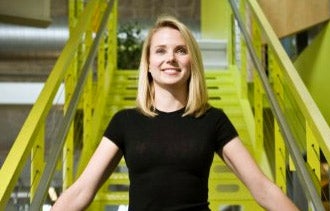
Credits -wired.com

Sunday, July 15, 2012

Robert Timms

Robert Timms is having a 1 for 1 so we went there for dinner ytd.

The food was really good but thank god for the 1 for 1 deal otherwise it would be very expensive.

One main course is more than 20 bucks.


Monday, July 9, 2012

China, India Grapple With Growth Challenges


[image]


China and India are both dealing with economic slowdowns but are on completely different footings to tackle the challenge. Beijing has a range of fiscal and monetary options to revive growth, while New Delhi must make tough political decisions to stem its decline.


China is better positioned to handle a shock than it was in 2008. It relies less on trade for growth: In 2008, China's net exports amounted to 7.7% of GDP; in 2011 the share had dropped to 2.6%. Beijing reported on Monday that inflation declined to 2.2% in June, compared with a year ago. With government debt at an estimated 22% of GDP, China has plenty of levers to pull to stimulate its economy in the face of declining demand.


"China is in a very comfortable position compared to the rest of the world," said Luis Kuijs, project director at the Fung Global Institute, a Hong Kong think tank. "It's more a matter of choice of what policy measures it will take to stimulate the economy, rather than whether it will be able to."


image


A large portion of China's economy is in the hands of its state-owned companies. That means the government can more easily get its economic decisions carried out—though it does present long-term problems for China as it tries to shift to an economy based on more innovation, competition and private enterprise.


The Chinese government recently has stepped in with stimulus measures. To boost demand for commodities and construction among other industries, the government approved two steel plants and several energy projects. On the monetary front, the central bank has cut interest rates twice in the past few weeks—the first such moves since December 2008—and in May reduced the level of reserves banks are required to hold. China has plenty of room for additional monetary moves.


"India's hands are tied, and because of that it's much more exposed to the global slowdown," said Frederic Neumann, co-head of Asian economic research for HSBC. "It has no fiscal ammo left to pump-prime the economy, so it has to endure a slowdown and take it on the chin."
India's main challenge is to stimulate business investment, which is drying up amid wariness among both domestic and foreign companies about shifting tax policies and regulations. The country's currency, the rupee, has tumbled against the dollar in the past year, partly due to growing investor concerns about India's high current-account deficit, which is roughly 4% of GDP. The rupee's fall has driven up real import costs for Indian companies and made foreign-currency loans more expensive to service.
The Reserve Bank of India in April cut interest rates for the first time in three years to fuel business lending. But when industry was looking for more last month, the central bank said it couldn't cut rates further with inflation uncomfortably high at 7.6%.

Tuesday, July 3, 2012

Self-Motivation Spirit

Okay, before I start this entry. I must say its really random but I was inspired by my long-time neighbour who is one year older than me.


I have not talked to him for a very long time because he's quite a far neighbour, he stays one storey below me.


So cutting to the chase, I saw him today in the lift and had a small chat. He told me that he's currently working in Logistics right now and that he's going to Uni next year. He mentioned that he should have studied hard last time because for him to go Uni at age 24, its very straining especially when he's working part-time as well.


What caught on to me was the tenacity he had, not the lateness of him going to the University per se. When I heard that he's going to the University next year, I was thinking oh wow, this guy actually is really determined. In the past, he used to be from the Normal Technical stream which is technically the worse class and he was extremely playful. But seeing the person he has become today and his perseverance to go to Uni even though he has to work, I can't help but be inspired by him.


Many a times, I hear people complaining about school and work. To be honest, I'm kinda sick of it and I think they are really lacking the resilience. People give up so easily these days and I don't see the hunger in them anymore.


There's no drive in them and there's no ambition at all. They are just getting by as the days pass, happy with being just the average.


However, personally, I don't just wish to be above average, I want to be the best and I work towards being the best.


Coming from a neighbourhood school background, I constantly live in the shadow of the elite students and since young I always thought to myself that they are of a different league and that there's no way I will be the best like them.


However, as I progress to Junior College, I got to be the first in my level and that was the first moment where I actually thought to myself, "Hey you know what? I can be the best!"


As I went to University, I knew it was going to be tough especially in Nanyang Business School where you get all the students coming from Raffles Junior College and Hwa Chong JC. Of course it was intimidating going head to head with these top students.


Nevertheless I fought hard and again I managed to achieve first in my level and I'm near the top student in Nanyang Business School right now. On hindsight, I'm quite disappointed with the level of the Raffles & Hwa Chong students. I mean no offence to them but I had way higher expectations of them. Perhaps its partly due to the marketing of their schools. But I'm certainly no where near impressed with these students at all. They lack the drive and ambition. I don't see them aiming high or even aiming at all.


And today, I see my neighbour even at this age, still striving to be a better person even with so much commitments. These are the people that give me goosebumps, those people that work hard for things.


They fight for everything and they give it their all each and every time.


I hope to work with such people as I enter the workforce and together, we will conquer that corporate ladder!

Sunday, July 1, 2012

The people around me are the people I chose.


Some of your employees drive you nuts. Some of your customers are obnoxious. Some of your friends are selfish, all-about-me jerks.


You chose them. If the people around you make you unhappy it's not their fault. It's your fault. They're in your professional or personal life because you drew them to you--and you let them remain.


Think about the type of people you want to work with. Think about the types of customers you would enjoy serving. Think about the friends you want to have.
Then change what you do so you can start attracting those people. Hardworking people want to work with hardworking people. Kind people like to associate with kind people. Remarkable employees want to work for remarkable bosses.


Successful people are naturally drawn to successful people.


~This is so true.

Credits -inc.com